
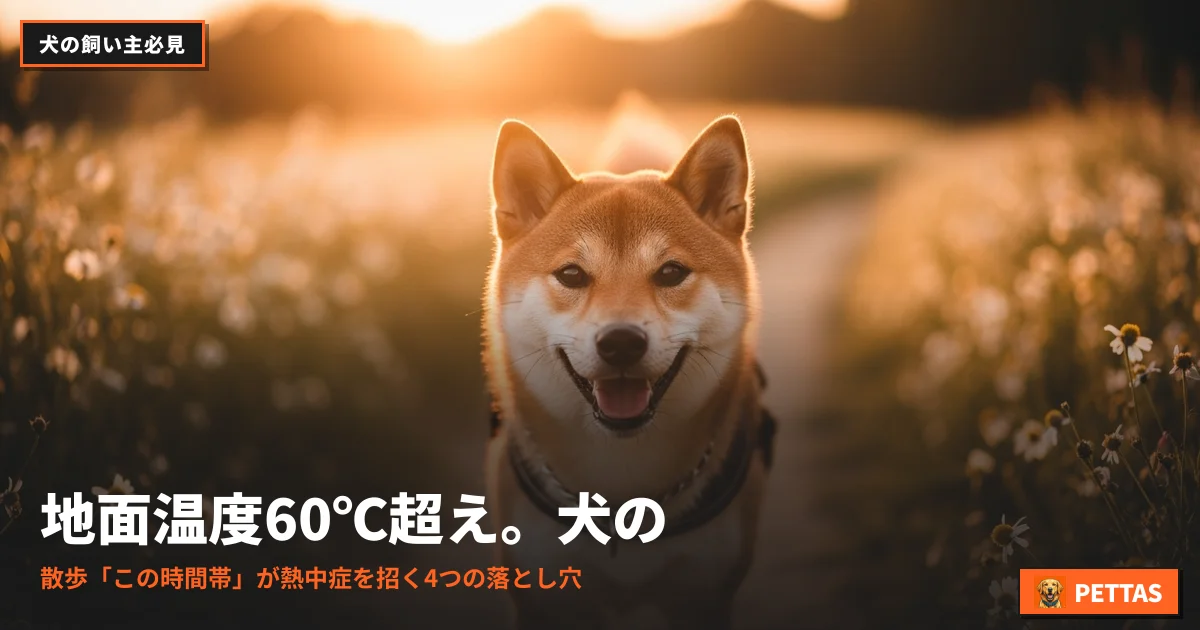
60C Pavement: 4 Dog Walk Mistakes Causing Heatstroke (2026)

PETTAS Editorial Team
Up-to-date pet health guidance
Pavement hits 60C (140F) even at 28C air temp. Learn the 4 walk timing mistakes, warning signs by stage, and gear that keeps dogs safe. Full checklist inside.
Contents(9)
Is Your Dog's Evening Walk Actually Safe?
Millions of dog owners assume evening walks are safe because the air feels cooler. But here's the reality: asphalt surface temperatures can exceed 60C (140F) even when the air temperature is only 28C (82F). A dog walking at 10-30 cm (4-12 inches) off the ground is exposed to radiant heat that humans standing upright simply cannot feel.
According to veterinary guidelines, a dog's core temperature above 39.5C (103.1F) is considered the onset of heat stress, and above 41C (105.8F) is a life-threatening emergency. Unlike humans, dogs cannot sweat through their skin. They rely almost entirely on panting to release heat, and that mechanism becomes dramatically less efficient when ambient temperatures approach their body temperature.
This guide covers the 4 most common dog walk timing mistakes, how to read early and emergency heatstroke signs, and the gear that can genuinely help.
Why Dogs Are More Vulnerable Than You Think
Panting works by evaporating moisture from the nose, mouth, and airways. When humidity is high or air temperature is close to body temperature, evaporation slows, and the cooling system effectively fails. This is why the combination of heat AND humidity is so dangerous.
Brachycephalic (flat-faced) breeds face an additional challenge: their narrowed airways make panting less efficient to begin with, so they reach dangerous body temperatures faster than other breeds. Senior dogs and overweight dogs are also in a higher-risk category, as cardiovascular efficiency and heat tolerance both decline with age.
4 Walk Timing Mistakes That Lead to Heatstroke
Mistake 1: "Evening walks are fine after 5 PM"
Air temperature peaks around 2-3 PM, but asphalt retains heat for 2-3 hours after sunset. In many cases, ground-level temperatures at 6 PM are still above 50C (122F). Air temperature alone is not a reliable guide.
The 7-second hand test: Press your palm flat against the pavement for 7 seconds before every walk. If you pull away from the heat, it's too hot for your dog.
Mistake 2: "Boots protect against heatstroke"
Dog boots prevent burns to the paw pads, but they do not reduce core body temperature or prevent heatstroke. Wearing boots does not extend the safe window for walking in the heat. Time of day, air temperature, and humidity management are the real variables.
Mistake 3: "Early morning is always safe"
Early mornings (before 6 AM) are generally the safest window. However, after consecutive days of high temperatures, asphalt may not have fully cooled overnight. Always do the 7-second test even on early morning walks during heat waves.
Mistake 4: "If the dog seems fine, we can keep going"
Dogs are wired to follow their owners. They often continue walking even when showing early signs of heat stress. Relying on "the dog looks okay" is unreliable. Instead, set hard rules based on temperature and time, and stick to them regardless of how your dog appears.
Heatstroke Warning Signs: Early vs. Emergency
Early Signs (stop and rest immediately if 2+ present)
- Panting that is heavier or faster than usual and does not settle after resting
- Excessive or unusually thick, sticky drool
- Noticeably slower walking pace
- Attempting to lie down on the ground
- Drinking water aggressively
Emergency Signs (move to cool area and call a vet NOW if any 1 is present)
- Gums or tongue appearing pale, white, or purple
- Stumbling, falling, or inability to stand
- Vomiting or diarrhea
- Unresponsive to name or commands
- Seizures or muscle tremors
When to call a vet: If your dog does not recover within 10-15 minutes in shade with water, or if any emergency sign appears, call your veterinarian immediately while traveling to the clinic. Heatstroke progresses rapidly, and delayed treatment significantly increases the risk of organ failure.
Safe Walk Temperature Guidelines
| Air Temp | Recommended Walk Window | Ground Check | Max Duration |
|---|---|---|---|
| Below 25C (77F) | Any time | Recommended | Normal |
| 25-28C (77-82F) | Before 7 AM / After 8 PM | Required | 20-30 min |
| 28-30C (82-86F) | Before 6 AM only | Required | 15-20 min |
| Above 30C (86F) | Avoid; outdoor toilet trips only | — | 5 min max |
Note: When humidity exceeds 70%, move one row higher in terms of risk. Use the Wet Bulb Globe Temperature (WBGT) index as a reference when available.
Essential Gear for Summer Walks
The right equipment does not eliminate risk, but it creates meaningful safety margins.
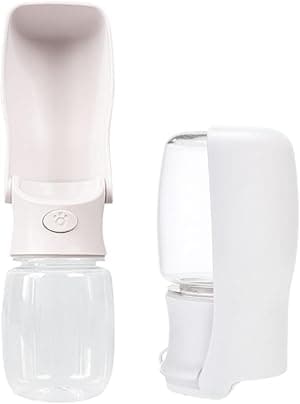
Water bottle: Carry 50-100 ml of water per 5 kg (11 lbs) of body weight and offer small amounts every 20-30 minutes during the walk. A one-handed portable bottle makes this practical.
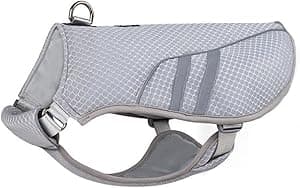
Cooling vest: Water-activated cooling vests use evaporative cooling to lower the surface temperature of your dog's body. They are especially effective for brachycephalic breeds.
Ice neck ring: Placing a PCM (phase-change material) ring around the neck cools the carotid arteries, which efficiently reduces core body temperature. Look for one that activates at around 24C (75F).
Wet towel: Wetting the inner thighs, armpits, and back of the neck (where large blood vessels run close to the skin) is one of the fastest first-aid cooling methods available.
Electrolyte supplement: Plain water is good, but electrolyte powder mixed in water helps dogs recover lost minerals, especially after exercise in the heat.
3 Actions You Can Take Starting Today
-
Do the 7-second pavement test before every walk this week. Make it a non-negotiable habit. If the pavement burns your hand, it burns your dog's paws and radiates heat into their body.
-
Pack your walk bag tonight with a water bottle and a cooling item. Pre-packing removes the "it's a short walk" excuse. The days when you think it will be quick are often the days when something goes wrong.
-
Log your dog's walks for 7 days. Record the time, air temperature, and how your dog's breathing looked at the end. Patterns emerge quickly, and you will start to learn your individual dog's tolerance thresholds.
FAQ
Q1. How quickly can a dog develop heatstroke?
A. In temperatures above 30C (86F) with high humidity, some dogs can reach dangerous core temperatures in as little as 15-20 minutes of activity. Brachycephalic breeds, senior dogs, and overweight dogs may reach dangerous levels even faster.
Q2. What is the correct first aid for suspected heatstroke?
A. Move the dog immediately to a cool, shaded, or air-conditioned area. Apply room-temperature or slightly cool water (not ice-cold water, as this can cause blood vessels to constrict and slow cooling) to the neck, armpits, and inner thighs. Allow small sips of water if the dog is conscious. Call your veterinarian immediately and head to the clinic.
Q3. Do dog boots prevent heatstroke?
A. No. Boots protect against paw pad burns from hot pavement, but they do not reduce core body temperature or prevent heatstroke. Walk timing and temperature management remain the essential factors.
Q4. Is high humidity dangerous even on cool days?
A. Yes. Panting relies on moisture evaporation to cool the body. When humidity is high, evaporation is less efficient. A day with 25C (77F) air temperature and 85% humidity can be more dangerous than a dry day at 30C (86F). Always factor in both temperature and humidity.
Q5. What should dogs do for exercise on days too hot to walk?
A. Indoor mental stimulation is a surprisingly effective substitute. Food puzzles, short training sessions, and nose-work games engage dogs physically and mentally without heat exposure. Many behaviorists note that 15 minutes of focused mental activity can satisfy a dog as effectively as a longer walk.
Track Your Dog's Summer Health with PETTAS
The advice in this article works best when it becomes a consistent habit, and habits stick when you have a system. PETTAS is a pet health management app built specifically to help owners stay on top of exactly this kind of recurring, easy-to-forget care.
- Health timeline: Log walk conditions, panting intensity, and water intake right after each outing
- Family sharing: Everyone in the household sees the same records, so no one walks the dog during unsafe hours without context
- AI health analysis: Spot patterns in your dog's heat sensitivity over time
- Vet visit notes: Record what happened, what treatment was given, and what to watch for next time
Building the habit of recording is the first real step toward keeping your dog safe through summer.
Recommended products5 picks
#ad Contains Amazon affiliate links



Family sharing
Share every care note with the whole family
Walks, training notes, vaccinations, and meds in one place. No more 'did you give the meds?' messages in the family chat.
All features free for 14 days — no card required
Get the latest articles by email
Weekly updates on pet health, medications, and insurance — straight to your inbox.
Share this article
Related Articles
Best 5 Heat Protection Gear for Dogs in 2026 | Keep Your Pup Safe This GW Season
2026-05-03

Dog Harness Types Explained: Mesh vs Power vs Vest -- Complete Buying Guide 2026
2026-05-07

Best 5 Dog Water Bottles for Walks & Travel 2026|Beat the Heat This GW Season
2026-05-05

Best Anti-Slip Mats for Senior Dogs 2026 | Stairs & Floor Comparison + Mobility Care Gear
2026-04-28

Best 5 Flea & Tick Prevention Products for Dogs in 2026: Shampoo, Collar, Spray & More
2026-04-27