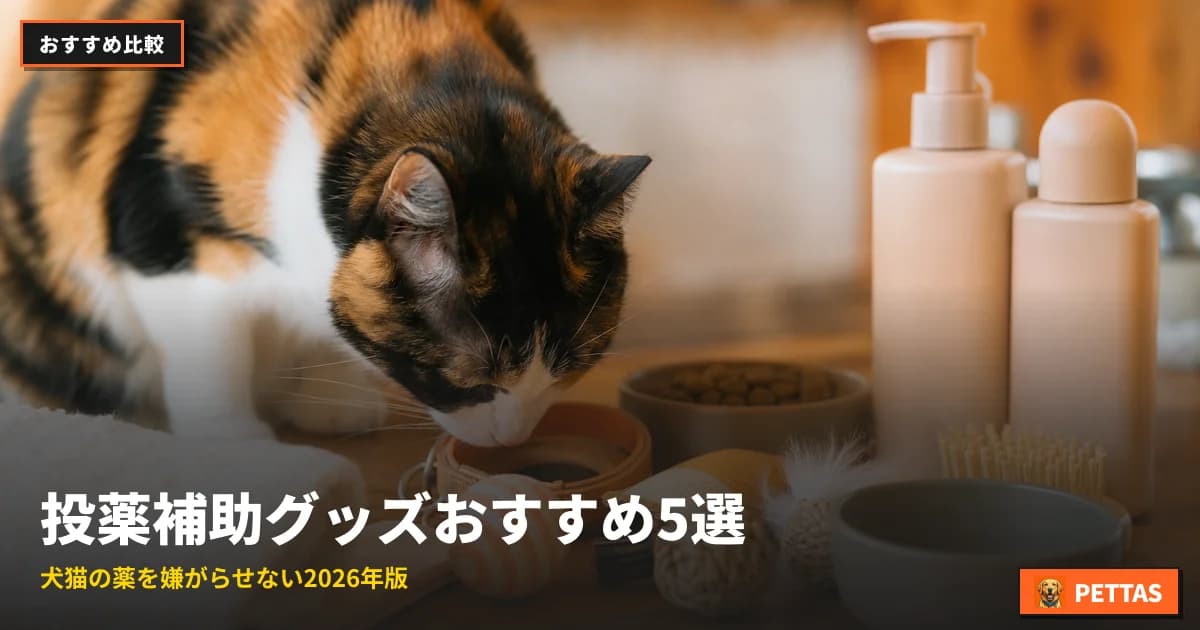
5 Best Pet Pill Aids for Dogs & Cats (2026) | Buyer's Guide

PETTAS Editorial Team
Up-to-date pet health guidance
Pill time a battle every day? Compare 5 types of pet medication aids - pill pockets to syringes. Quick-pick chart inside to find the right fit for your pet.
Contents(8)
Last updated: 2026-05-26
Is giving your pet medication a daily struggle? You're not alone. Whether it's a dog that chews around the tablet or a cat that spits out every capsule, getting pets to take their medicine is one of the most common frustrations for pet owners.
The good news: the right medication aid tool can make this much easier. In this guide, we compare 5 types of pet medication aids to help you find what works best for your dog or cat.
Quick Pick: Best 5 by Use Case
| Use Case | Product Type | Why It Works |
|---|---|---|
| Best Overall | Pill pocket (soft treat wrap) | Covers scent, works for tablets & capsules |
| Best for Cats | Paste / liquid treat mixing | High success rate for scent-sensitive cats |
| Best Budget | Homemade wrap (cheese, soft food) | Near zero cost, easy to try first |
| Best for Powder Meds | Wet food mixing | Simple and scent-masking |
| Best for Swallowing Issues | Oral syringe / dropper | Most reliable, ideal for seniors |
Not sure where to start? Pill pockets are the easiest first step for most dogs.
How to Choose a Medication Aid
1. Match the medication form
Tablets and capsules work best with soft wraps or pill pockets. Powder medications are easier mixed into wet food or given via syringe. Liquid medications require a dropper or oral syringe for reliable dosing.
2. Check safety for your species
Dogs and cats metabolize differently. Some ingredients safe for dogs - like propylene glycol or xylitol - can be toxic to cats. Always check labels marked "for dogs and cats" and confirm with your vet.
3. Watch calories and sodium
If your pet is on a prescription diet or weight management plan, low-calorie options matter. Daily pill aids add up over weeks and months.
4. Pick a flavor your pet likes
Chicken, liver, and dairy flavors are common. If your pet is picky, trying a few flavors before committing to a large package saves money.
5. Consider ease of use for you
You'll do this every day. Simpler is better. If a pill pocket takes 30 seconds to seal and your pet swallows it in one go, that's a win.
5 Best Pet Medication Aid Types
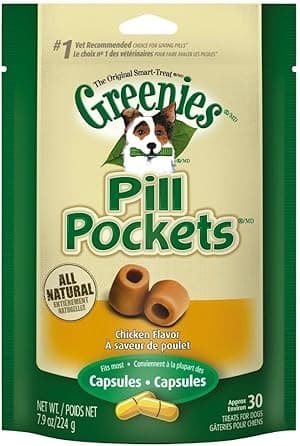
1. Soft Pill Pocket (Treat Wrap Type)
Price range: approx. $10-18 per pack (224g)
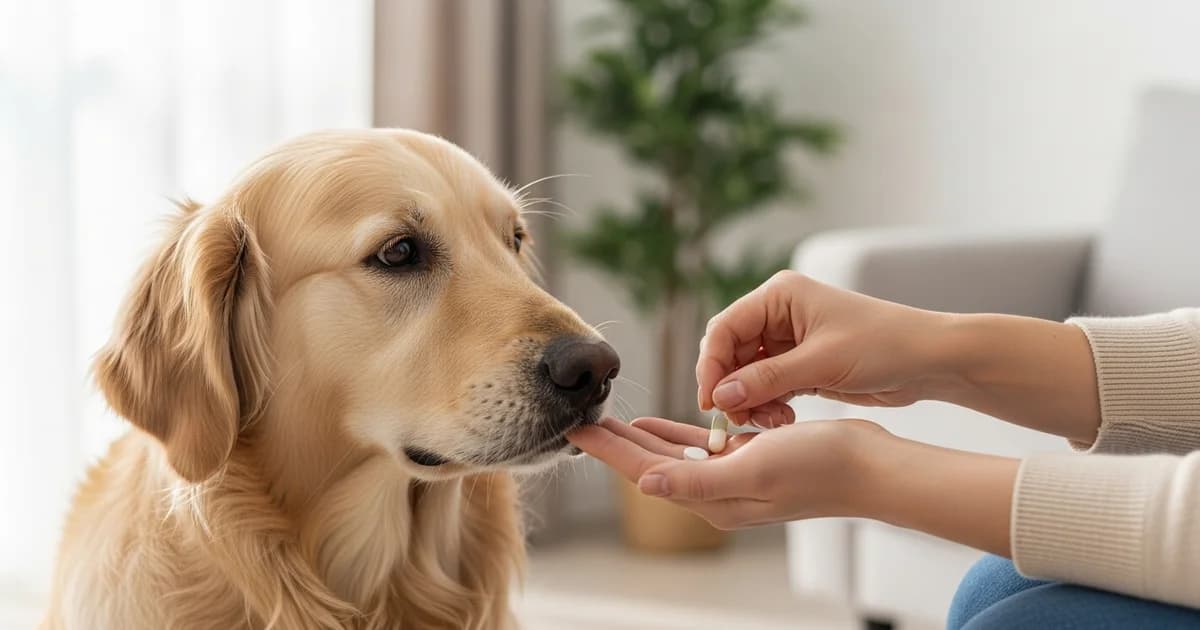
The most popular option for dogs. Soft, moldable treat dough wraps around tablets or capsules and hides the scent. Most dogs eat it without hesitation. Look for capsule-specific and tablet-specific shapes for a better seal. Not as effective for cats who tend to lick rather than chew.
Best for: Food-motivated dogs taking daily tablets or capsules.
2. Paste or Liquid Treat Mixing (Churu-Style)
Price range: approx. $4-12 per box
Mixing powder or crushed tablets into a paste-style treat works especially well for cats. The strong scent of the treat masks the medication. Single-serve tubes keep things hygienic and portion-controlled. One of the most effective methods for cats that sniff out pills hidden in solid food.
Best for: Cats that detect pills hidden in food.
3. Wet Food Mixing
Price range: $1-3 per can or pouch
The simplest and cheapest method. Mix powder or finely crushed tablets into a small portion of wet food. Give the medicated portion first, then offer the rest. Risk: if the pet doesn't finish the portion, dosing becomes uncertain. Confirm with your vet that the medication can be mixed with food.
Best for: Pets with a strong appetite who eat everything offered.
4. Oral Syringe / Dropper
Price range: approx. $3-8
For liquid medications or powder dissolved in water. Slide the tip gently between the cheek and rear teeth, then dispense slowly. Pet-specific syringes have soft tips to avoid injury. The most reliable method for ensuring the full dose is given - especially useful for senior pets or those with swallowing difficulty.
Best for: Liquid medications, senior pets, or pets that spit out everything else.
5. Homemade Wrap (Cheese, Soft Treats, etc.)
Price range: near zero
A small piece of cheese, cooked chicken, or banana (for dogs) can work just as well as commercial pill pockets for many pets. The familiar scent and taste encourages quick swallowing. Important: check which human foods are safe for your pet, and avoid high-sodium options or foods incompatible with prescription diets. Ask your vet before using.
Best for: Budget-conscious owners wanting to test the concept before buying a product.
Side-by-Side Comparison
| Type | Price Range | Medication Form | For Dogs | For Cats | Key Caution |
|---|---|---|---|---|---|
| Soft pill pocket | $10-18/pack | Tablet, capsule | Excellent | Fair | Watch calories |
| Paste/liquid mixing | $4-12/box | Powder, liquid | Good | Excellent | Confirm full dose taken |
| Wet food mixing | $1-3/can | Powder, crushed | Good | Good | Risk of incomplete dosing |
| Oral syringe | $3-8 | Liquid, dissolved powder | Good | Excellent | Avoid aspiration |
| Homemade wrap | Near zero | Tablet, powder | Excellent | Fair | Check safe foods first |
Summary
For most dogs: start with a soft pill pocket. It's fast, low-stress, and works for the majority of daily medications.
For most cats: try paste or liquid treat mixing first. Cats are more likely to detect solid pills hidden in food.
For seniors or liquid medications: an oral syringe is the most reliable option, and most vets can show you the right technique in under a minute.
The key principle is avoiding the "wrestling match" - the more negative the pill experience, the harder it gets over time. Finding a method your pet tolerates early makes long-term medication management much easier.
Track Medications with PETTAS
Once you have the right tool for giving medication, the next challenge is remembering to give it consistently. Missed doses are common, especially during busy periods like travel or schedule changes.
PETTAS is a pet health management app designed with medication reminders in mind - so you get a notification before you forget, not after. Log doses, set recurring reminders, and share records with your vet at the next visit.
👉 Try PETTAS for medication tracking
FAQ
Q1. My dog chews around the pill pocket and spits out the tablet. Any fix?
A. Try pinching the pocket completely sealed with no air gaps - scent escaping through gaps is usually the trigger. You can also coat the tablet lightly with a tasteless gel before wrapping to reduce odor leak. If that fails, try giving the pill pocket immediately after exercise when hunger is higher.
Q2. Can I crush tablets and mix them into food?
A. Not always. Some tablets are enteric-coated (designed to dissolve in the intestine, not the stomach) and crushing them changes how they work. Extended-release tablets should never be crushed. Always confirm with your vet whether crushing is safe for the specific medication prescribed.
Q3. Are pill pockets safe for cats?
A. Most commercial pill pockets are formulated for dogs. For cats, check for the absence of propylene glycol, xylitol, and any artificial sweeteners. Cat-specific formulations exist and are the safest choice. When in doubt, ask your vet.
Q4. My pet is on a prescription diet. Can I still use treats for medication?
A. This depends on the diet and the condition being managed. Some prescription diets (e.g., for kidney disease or allergies) require strict control of protein sources or minerals, making many treats off-limits. Ask your vet for approved options - sometimes a tiny amount of the prescription diet itself as a "pill wrap" is the safest workaround.
Q5. How do I use an oral syringe correctly without causing choking?
A. Insert the tip gently into the space between the cheek and the back teeth (not directly into the throat). Tilt the head slightly upward, dispense in small amounts, and pause to let the pet swallow between each squirt. Going slowly is more important than speed. Ask your vet to demonstrate the first time if you're unsure.
References
- Administering Medications to Pets - Cornell Feline Health Center - Safe oral medication techniques for cats
- Giving Medications to Your Dog - VCA Animal Hospitals - Step-by-step guide to oral tablet and liquid dosing in dogs
- Merck Veterinary Manual: Routes of Drug Administration - Pharmacological basis for oral dosing methods in companion animals
- AAHA Medication Compliance Guidelines - Veterinary best practices for improving pet medication adherence
- Animal Drug Safety - FDA Center for Veterinary Medicine - Regulatory guidance on safe use of animal medications in the US
Recommended products1 picks
#ad Contains Amazon affiliate links
Medication reminders
Automate medication schedules with PETTAS
Register medications once and get automatic reminders. Log doses in real time with the whole family — no more missed or duplicate doses.
All features free for 14 days — no card required
Get the latest articles by email
Weekly updates on pet health, medications, and insurance — straight to your inbox.
Share this article