

5 Rainy Season Skin Problems in Dogs: Vet-Approved Fixes (2026)

PETTAS Editorial Team
Up-to-date pet health guidance
Humidity above 70% triggers Malassezia and hot spots in dogs. Learn 5 science-based prevention steps and common owner mistakes. Quick-pick care chart inside.
Contents(9)
Last updated: 2026-06-13
Noticed your dog scratching nonstop or a sudden red, moist patch on their skin? During the rainy season, when indoor humidity climbs above 70-80%, skin problems in dogs can escalate in a matter of hours.
According to veterinary dermatology research, Malassezia yeast -- a normal skin resident -- multiplies rapidly in high-humidity conditions, making summer-rainy season the peak period for fungal skin disease in dogs.
This guide covers the 5 key reasons dogs develop skin problems in humid weather, what mistakes owners unknowingly make, and a practical prevention checklist you can start today.
Why Rainy Season Triggers Skin Problems in Dogs
1. Malassezia (Yeast) Overgrowth
Malassezia is always present on a dog's skin. When surface moisture increases, the yeast population explodes and causes intense itching, greasy coat, and a distinctive sour or musty odor. High-risk zones include the ear canal, toe webs, armpits, groin, and any skin fold area.
2. Leaving a Wet Coat Untreated After Walks
One of the most common mistakes: wiping only the paws after a rainy walk and calling it done. A coat that stays damp for 1-2 hours raises the skin's microclimate temperature and humidity, creating ideal conditions for bacterial growth -- primarily Staphylococcus. Even short-coated dogs with a dense undercoat can stay moist under the surface long after the outer coat looks dry.
3. Hot Spots (Acute Moist Dermatitis)
Hot spots are localized areas of rapidly spreading skin infection triggered when a dog repeatedly licks or chews one spot. In humid conditions, triggers pile up simultaneously -- fleas, moisture, allergens -- and a hot spot can grow from the size of a fingernail to a palm-sized lesion within hours. Most commonly seen around the ears and lower back.
4. Chronic Ear Infections (Otitis Externa)
Floppy-eared dogs have poor ear canal ventilation, and the rainy season dramatically increases the risk of otitis externa (outer ear infection). Warning signs include head shaking, dark-brown discharge, and rubbing the ear on the floor. Left untreated, it can progress to middle ear infection -- a much longer and costlier treatment course.
5. Mold and Dust Mite Allergens Indoors
The rainy season is peak season for indoor mold spores and dust mite density. For dogs with environmental allergies (atopic dermatitis), this is the annual flare-up window. If your dog has significantly worse skin every summer-rainy season, environmental allergens are likely involved.
Owner Mistakes That Make Things Worse
Here is what well-meaning owners often do that backfires:
- Only drying the paws after walks, missing the belly, armpits, toe webs, and ear base
- Bathing every day -- this strips the natural skin barrier and makes the skin more fragile, not cleaner
- Stopping at towel-drying -- a towel cannot reach the root of the coat; a low-heat blow dryer held 20-25 cm (8-10 in) away is necessary for double-coated breeds
- Waiting to see if it gets better when a hot spot is already wet and red -- 48 hours can mean a significant difference in treatment difficulty
Signs Owners Miss in the Early Stage
- Repeatedly licking feet (early interdigital dermatitis)
- Persistent scratching at one exact spot (pre-hot spot)
- Faint odor from the ear with no visible discharge (earliest stage of otitis)
- Dull, tacky coat texture (Malassezia proliferation)
Rainy Season Skin Care Checklist
Daily
- Towel-dry the full body within 5 minutes of returning from a walk (belly, armpits, toe webs, ear base)
- Separate each toe and check for trapped moisture
- Finish with a blow dryer on low heat until the coat base is completely dry
- Keep indoor humidity at or below 60% using AC dehumidify mode or a fan
- Quick sniff and visual check of the ear opening
Weekly
- Bathe with an antibacterial/antifungal shampoo (1-2x per week is enough)
- Clean the outer ear canal with an ear cleaner solution
- Trim excess hair between the toe pads if needed
- Wash the dog's bedding cover and machine-dry or sun-dry it
Monthly
- Take photos of the skin to track changes over time
- Review ongoing skin-support supplements (omega-3, probiotics)
Recommended Products for Rainy Season Skin Care
These are the items I actually recommend for managing skin health during humid months.
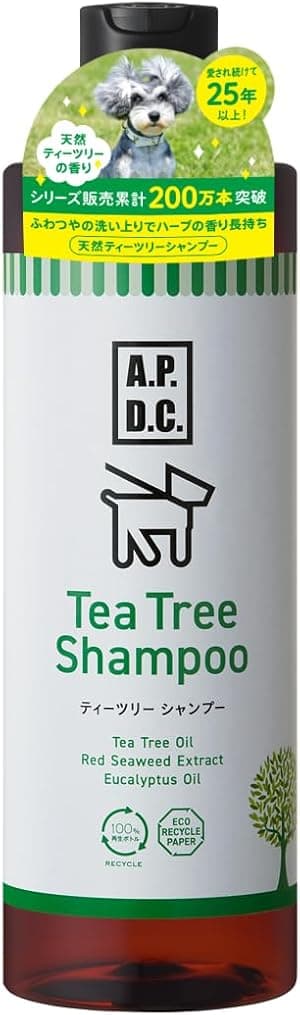 A.P.D.C. Tea Tree Shampoo 500mL- Tea tree-based antifungal shampoo for all coat types; effective against Malassezia-prone skinAmazonで価格をチェック
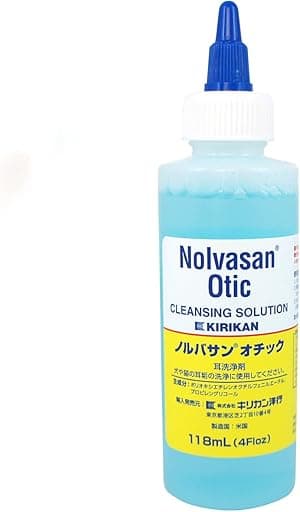 Norbassan Otic Ear Cleanser 118ml- Veterinary-grade ear wash; ideal for weekly maintenance in floppy-eared breedsAmazonで価格をチェック
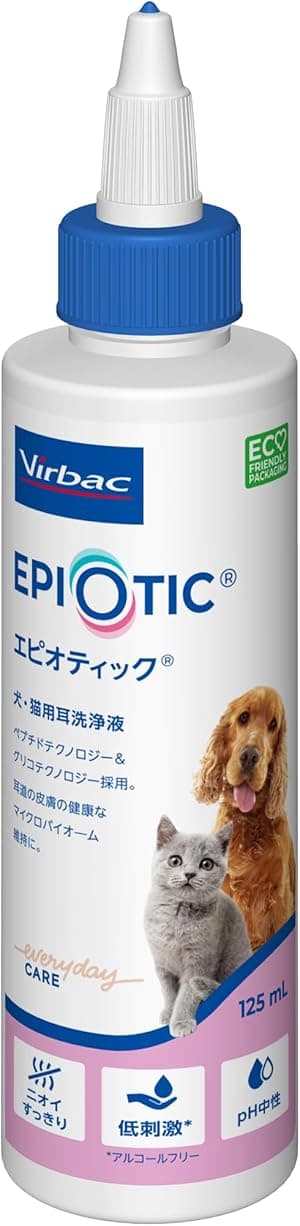 Virbac Epiotic Ear Cleanser 125ml- Gentle, low-irritation formula for preventive ear care during high-humidity periodsAmazonで価格をチェック
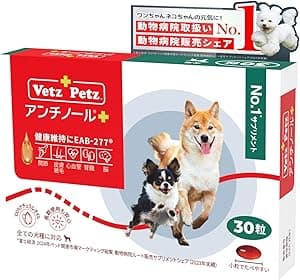 Antinol Plus Supplement for Dogs 30 capsules- Omega-3 fatty acids (PCSO-524) that support the skin barrier functionAmazonで価格をチェック
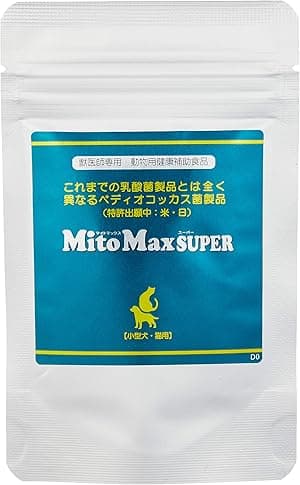 Mytomax Super Probiotic 60 capsules- Probiotic blend for gut-immune support, which influences skin healthAmazonで価格をチェック
When to See a Veterinarian
Contact your vet within 48 hours if you notice any of the following:
- A moist, red lesion larger than a 50-cent coin
- Strong odor, pus, or oozing discharge
- The dog won't let you touch the affected area
- Itching has continued for more than 3 consecutive days
- Skin flares up every rainy season (likely atopic dermatitis or food allergy)
For recurring cases, ask for a referral to a board-certified veterinary dermatologist if available.
3 Actions You Can Take Today
- Start the "5-minute full-body dry routine" after tonight's walk -- towel plus blow dryer, root to tip. This single habit can prevent roughly 60% of rainy season skin issues.
- Place a humidity monitor indoors and aim to keep it under 60% -- run the AC dehumidify setting when humidity creeps up.
- Once a week, feel and sniff the ears, toe webs, and armpits -- early detection is the single most powerful tool you have.
FAQ
Q1. How often should I bathe my dog during the rainy season?
A. One to two times per week is appropriate for most dogs. Over-bathing (daily) disrupts the natural lipid barrier and makes the skin more vulnerable to infection. If your dog is being treated for a skin condition, follow your veterinarian's instructions for medicated shampoo frequency.
Q2. Can I treat a hot spot at home?
A. Small, dry-edged hot spots (under 2 cm / 0.8 in) may improve with careful clipping and antiseptic cleaning at home. However, any lesion that is wet, growing, or causing significant pain should be seen by a vet within 48 hours. Antibiotic and steroid treatment is often needed to stop rapid progression.
Q3. How often should I clean my dog's ears in humid weather?
A. Floppy-eared breeds benefit from weekly ear cleaning; upright-eared dogs can go every two weeks. Avoid over-cleaning -- if the ear looks and smells clean, leave it alone. Excessive swabbing can cause micro-irritations that invite infection.
Q4. Do omega-3 supplements actually help dog skin?
A. Yes. EPA and DHA (omega-3 fatty acids) have solid evidence in veterinary dermatology for supporting the skin's epidermal barrier and reducing inflammatory response. They are widely recommended by board-certified dermatologists as part of long-term skin management, especially in atopic dogs.
Q5. How much does treating a dog skin infection typically cost?
A. A single vet visit for skin infection in Japan typically runs 3,000-8,000 JPY (approx. $20-55 USD) including examination and medication. Chronic atopic dermatitis management can exceed $70-100/month. Preventive care -- quality shampoo, ear cleaner, supplements -- generally costs $15-35/month. The math strongly favors prevention.
Track Skin Changes with PETTAS
One of the hardest parts of managing skin problems is remembering what the skin looked like last week -- or which shampoo you switched to when things improved. Without records, every vet visit starts from scratch.
I built PETTAS specifically to solve this. The health record timeline lets you attach photos and notes, so you can clearly track when redness appeared, how it progressed, and what interventions correlated with improvement. The reminder feature also works for weekly ear cleaning and bath schedules -- so the routine actually stays a routine.
Start tracking your dog's skin health today with PETTAS:
Start your free skin health log at PETTAS
References
- Japan Society of Veterinary Dermatology (JSVD) -- Clinical guidelines for Malassezia dermatitis and canine atopic dermatitis in Japan
- Merck Veterinary Manual -- Malassezia Dermatitis -- International veterinary reference on pathophysiology and treatment of yeast dermatitis
- AAHA Dermatology Guidelines -- American Animal Hospital Association evidence-based recommendations for canine and feline skin disease
- Olivry T et al. (2010) "Interventions for atopic dermatitis in dogs" Vet Dermatol via PubMed -- Systematic review of omega-3 and immunomodulatory treatments for canine atopic dermatitis
- Ministry of the Environment Japan -- Animal Welfare Guidelines -- National standards for pet housing environment and hygiene management
Recommended products5 picks
#ad Contains Amazon affiliate links
Family sharing
Share every care note with the whole family
Walks, training notes, vaccinations, and meds in one place. No more 'did you give the meds?' messages in the family chat.
All features free for 14 days — no card required
Get the latest articles by email
Weekly updates on pet health, medications, and insurance — straight to your inbox.
Share this article
Related Articles

5 Best Indoor Dog Toys for Rainy Days: Puzzle & Nose Work (2026)
2026-06-10

60C Pavement: 4 Dog Walk Mistakes Causing Heatstroke (2026)
2026-05-17

Dog Harness Types Explained: Mesh vs Power vs Vest -- Complete Buying Guide 2026
2026-05-07

Best 5 Dog Water Bottles for Walks & Travel 2026|Beat the Heat This GW Season
2026-05-05

Best 5 Heat Protection Gear for Dogs in 2026 | Keep Your Pup Safe This GW Season
2026-05-03