

5 Basic Dog Training Steps: A Complete Spring Guide for Puppy Owners

PETTAS Editorial Team
Up-to-date pet health guidance
Struggling with a dog that won't listen? Learn 5 vet-approved dog training basics—from sit and stay to leash manners—perfect for spring puppy owners. Includes common mistakes, checklists, and when to see a vet.
Contents(9)
Is your dog not listening no matter what you try? You're not alone—and it's not your fault.
According to the American Veterinary Society of Animal Behavior (AVSAB), behavior problems are the number one reason dogs are surrendered to shelters. Yet research consistently shows that dogs trained with positive reinforcement methods experience up to 60% fewer behavioral issues in the long run. Spring is the perfect season to start: the weather is mild, outdoor training is enjoyable, and many puppies are hitting their critical socialization window of 8–16 weeks. Plus, with rabies vaccinations and flea/tick prevention season underway, your dog will soon be spending more time outside—making leash manners and recall skills more important than ever.
In this article, we'll walk you through 5 foundational dog training steps, backed by veterinary science and practical experience.
Why Spring Is the Best Time to Start Dog Training
Spring brings longer days, comfortable temperatures, and more opportunities for outdoor exercise—all of which make it ideal for training. If you've recently welcomed a puppy, the 8–16 week socialization window is your most valuable training asset. During this period, puppies form lasting associations with people, sounds, environments, and experiences.
That said, spring also comes with unique distractions: pollen, new smells, insects, and more people and animals on sidewalks. This is exactly why building basic obedience now—before your dog is regularly exposed to these stimuli—pays off enormously.
Key spring considerations for training:
- Start leash training before full outdoor walks begin
- Pair training sessions with flea/tick prevention routines to build healthy habits
- Keep sessions short (5–10 minutes) to avoid heat fatigue as temperatures rise
The 5 Basic Dog Training Steps
Step 1: Name Recognition (Start at 8–10 Weeks)
Before any other command, your dog must reliably respond to their name. This is the foundation of every interaction.
How to do it:
- In a quiet indoor space, say your dog's name in a calm, upbeat tone.
- The moment your dog makes eye contact, reward them with a small treat (1g or less for dogs under 5kg).
- Practice 3–5 times per session, 3 sessions per day.
- Once success rate exceeds 80% indoors, gradually move to outdoor settings with mild distractions.
Step 2: Sit — Your Most Versatile Command
"Sit" is the gateway command that applies to almost every real-life situation: mealtime, greeting guests, waiting at crosswalks. Teach it using lure-and-reward:
- Hold a treat close to your dog's nose.
- Slowly move your hand back over their head—their bottom will naturally lower.
- The instant their bottom hits the floor, say "sit" and deliver the treat.
- Over 1–2 weeks, fade the lure so your dog responds to the verbal cue alone.
Step 3: Stay — Teaching Impulse Control
Impulse control may be the single most important safety skill a dog can have—preventing door-dashing, road accidents, and reactive behavior.
Progressive training:
- Begin with 1-second stays, rewarding immediately.
- Add 0.5–1 second per successful repetition.
- Target: 30-second stay with you standing 1 meter away (achievable in 3–4 weeks).
- Always release with a consistent word like "okay" or "free."
Step 4: Crate Training — Creating a Safe Space
A dog that sees their crate as a sanctuary is less prone to separation anxiety and destructive behavior. Never use the crate as punishment.
Step-by-step introduction:
- Place treats near, then inside the crate opening. Let your dog explore freely.
- Once your dog enters willingly, say "crate" or "house" and reward.
- Gradually close the door for 30 seconds, then open—no drama.
- Build up to 3–4 hours of calm crate time over several weeks.
Step 5: Loose-Leash Walking — Fixing the Pulling Problem
Leash pulling is the top complaint among spring walkers. The earlier you address it, the easier it becomes.
Direction-change method:
- The moment the leash goes taut, stop walking completely.
- Change direction and walk the other way.
- When your dog returns to your side (left heel position), immediately praise and treat.
- The rule: forward movement only happens when the leash is loose.
Start with 15-minute sessions and build from there.
Common Mistakes and Warning Signs to Watch For
Even well-intentioned owners can accidentally slow their dog's progress. Here's what to avoid:
| Mistake | Why It Backfires | Better Approach |
|---|---|---|
| Repeating commands multiple times | Teaches dogs they can ignore the first cue | Say it once, reset if no response |
| Yelling "No!" | Creates fear, not understanding | Redirect and reward the correct behavior |
| Delayed rewards | Dog can't connect the action to the reward | Treat within 0.5 seconds of the behavior |
| Inconsistent rules across family members | Causes confusion and slows learning | Everyone uses the same commands and rules |
| Sessions longer than 15 minutes | Leads to frustration and shutdown | Keep sessions to 5–10 minutes, 2–3x daily |
Stress signals to watch for during training:
- Ears pinned back
- Tail tucked between legs
- Excessive yawning or lip-licking (calming signals)
If you notice these signs, end the session immediately and give your dog a break. Pushing through stress responses undermines trust and learning.
Training Readiness Checklist
- Dog responds to name at least 2 out of 3 times indoors
- "Sit" achieved within 5 seconds of cue
- Treats are appropriately sized (under 1g for small dogs)
- All family members use the same commands
- Daily training time is under 30 minutes total
- Crate is never used as punishment
- Leash walking practice is happening before full outdoor walks
- Spring vaccinations and flea/tick prevention are up to date
When to See a Veterinarian or Behaviorist
Training challenges are normal—but some behaviors signal something deeper:
- Sudden increase in aggression (snapping, growling): May indicate pain or an underlying medical condition
- Persistent house-training accidents: Rule out urinary tract infections or gastrointestinal issues first
- Severe separation anxiety (prolonged barking, destructive behavior when alone): May require a combination of behavior modification and medication
- No improvement after 6+ months of consistent training: Consult a certified professional dog trainer (CPDT-KA) or veterinary behaviorist
Recommended Products for Effective Dog Training
The right tools make training smoother and more consistent. Here are some categories worth exploring:
 Petio Healthy Bolo-chan Small Grain 120gSmall training treats easy to portionAmazonで価格をチェック
 Itoshigo Beef Jerky Dog Treats Additive-Free Grain-FreeAdditive-free grain-free reward jerkyAmazonで価格をチェック
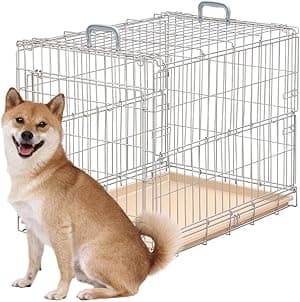 Iris Ohyama Folding Cage for Medium Dogs OKE-750RFoldable cage for medium dogsAmazonで価格をチェック
 Julius-K9 IDC Power Harness S/MiniWorld-renowned power harness for small dogsAmazonで価格をチェック
 Richell Camping Carrier Fine Double Door SCompact carrier for small dogs and catsAmazonで価格をチェック
Manage Training and Health Together with PETTAS
Consistent training works best when it's paired with consistent health management. Spring means rabies vaccination season and the start of monthly flea/tick prevention—easy things to forget in the excitement of training.
PETTAS's Vaccine Schedule Manager lets you log your dog's upcoming shots and sends reminders when it's time. The Medication Reminder feature ensures monthly flea/tick treatments never slip through the cracks. You can also use the Health Record Timeline to log training milestones like "first successful 'sit'" or "leash training started"—great for tracking progress and sharing with your vet.
And since consistent rules across family members are key to effective training, the Family Sharing feature keeps everyone on the same page in real time. No more "Dad uses a different word for sit."
3 Actions You Can Take Today
-
Do 5 name-recognition repetitions before your dog's next meal. Pre-meal training takes advantage of your dog's peak motivation—most owners see a response within the first session.
-
Write down and share your command list with everyone in the household. Agree on words like "sit," "stay," and "crate," and share them via a group chat or PETTAS's family sharing function.
-
Book your spring vet appointment for vaccinations and flea/tick prevention, then log it in PETTAS. A healthy dog is a trainable dog—getting preventive care sorted now means you can focus fully on training throughout the season.
Related Articles
If you found this helpful, you may also want to read:
Recommended products5 picks
#ad Contains Amazon affiliate links
Family sharing
Share every care note with the whole family
Walks, training notes, vaccinations, and meds in one place. No more 'did you give the meds?' messages in the family chat.
All features free for 14 days — no card required
Get the latest articles by email
Weekly updates on pet health, medications, and insurance — straight to your inbox.
Share this article
Related Articles

60C Pavement: 4 Dog Walk Mistakes Causing Heatstroke (2026)
2026-05-17

Dog Harness Types Explained: Mesh vs Power vs Vest -- Complete Buying Guide 2026
2026-05-07

Best 5 Dog Water Bottles for Walks & Travel 2026|Beat the Heat This GW Season
2026-05-05

Best 5 Heat Protection Gear for Dogs in 2026 | Keep Your Pup Safe This GW Season
2026-05-03

Best Anti-Slip Mats for Senior Dogs 2026 | Stairs & Floor Comparison + Mobility Care Gear
2026-04-28