

7 Indoor Cat Stress Signs in Spring: Subtle Behavior Changes Owners Miss

PETTAS Editorial Team
Up-to-date pet health guidance
Is your cat acting differently this spring? Up to 40% of indoor cats suffer from chronic stress — often unnoticed. Learn 7 warning signs and vet-approved solutions to help your cat feel safe and calm.
Contents(7)
Have you noticed your cat acting a little off lately now that spring has arrived?
You're not imagining it. Spring is one of the most stressful seasons for indoor cats, and according to the American Veterinary Medical Association (AVMA), an estimated 30–40% of indoor cats experience chronic stress — most of it going unrecognized by their owners.
In this article, we'll walk you through 7 subtle stress signs to watch for in spring, the common mistakes owners make when responding to them, and practical, vet-approved strategies you can start today.
Why Spring Is a High-Stress Season for Indoor Cats
Spring brings a cascade of changes that can overwhelm a cat's sensitive nervous system:
- Longer daylight hours disrupt circadian rhythms and sleep patterns
- Increased outdoor activity (birds, insects, stray cats) creates visual and auditory overstimulation through windows
- Owner schedule changes — new school years, job changes, or increased commuting — trigger separation anxiety
- Shedding season increases self-grooming and the risk of hairball-related discomfort
- Open windows let in unfamiliar scents from outdoor cats, heightening territorial instincts
When several of these factors occur simultaneously, the cumulative effect can push even a normally calm cat into a stress response.
7 Stress Signs Indoor Cats Show in Spring
Cats rarely display stress in obvious ways. Instead, look for these subtle behavioral shifts:
1. Excessive Grooming (Over-Licking)
Some grooming is normal — cats spend 20–50% of their waking hours on it. But repetitive licking of the belly, inner legs, or base of the tail is a red flag. Left unaddressed, this can progress to psychogenic alopecia (stress-induced hair loss).
2. Changes in Appetite
Eating significantly more or less than usual can signal stress affecting the digestive system. If your cat refuses food for more than 48–72 hours, contact your veterinarian.
3. Elimination Outside the Litter Box
Urinating or defecating outside the litter box is one of the most common — and misunderstood — signs of feline stress. It is not "acting out." It is a communication of distress and should also prompt a vet visit to rule out urinary tract disease.
4. Hiding or Retreating to High Places
A cat spending hours in the back of a closet or behind furniture is seeking escape from overstimulation. Occasional hiding is normal; sustained withdrawal is not.
5. Excessive Vocalization (Especially at Night)
Night-time yowling can indicate stress, but in cats over 10 years old it may also signal feline cognitive dysfunction or hyperthyroidism — both of which require veterinary evaluation.
6. Sudden Aggression
Unprovoked biting or scratching from an otherwise gentle cat often reflects pain, overstimulation, or anxiety rather than "bad behavior."
7. Urine Spraying
Even spayed or neutered cats may spray to mark territory when feeling threatened. Small amounts of urine on vertical surfaces (walls, furniture legs) are a telltale sign.
Spring Stress Check: How Does Your Cat Score?
- Repetitively licking the same body area
- Appetite noticeably higher or lower than usual
- Eliminating outside the litter box
- Hiding for extended periods
- Yowling or crying at night
- Biting or scratching more than usual
- Spraying urine on vertical surfaces
If 3 or more apply to your cat, schedule a vet visit.
Common Mistakes Owners Make
❌ Forcing affection when the cat withdraws A stressed cat often finds being held or touched more alarming, not comforting. Let your cat initiate contact.
❌ Scolding problem behaviors Cats do not respond to punishment the way dogs might. Yelling increases fear and worsens stress. Redirect, don't punish.
❌ Introducing a new pet immediately Adding another animal without a proper 2–4 week gradual introduction intensifies territorial stress dramatically.
❌ Rearranging furniture suddenly Cats rely heavily on environmental predictability. Major layout changes should be avoided or made incrementally.
5 Vet-Approved Ways to Reduce Spring Stress
1. Add Vertical Space
Cat trees or shelving at 150 cm or higher near windows give cats a secure vantage point to observe outdoor stimulation without feeling threatened.
2. Provide Multiple Hiding Spots
Aim for at least one hiding spot per cat plus one extra (e.g., two cats = three hiding spots). Cardboard boxes, covered carriers, and dome beds all work well.
3. Use Synthetic Feline Pheromones
Products like Feliway mimic the calming F3 facial pheromone cats naturally deposit when rubbing their faces on objects. Multiple peer-reviewed studies support their effectiveness. Use continuously for at least 30 days for best results.
4. Establish Consistent Routines
Feed at the same times daily and schedule two play sessions of 5–10 minutes each with a wand toy. Predictability significantly reduces anxiety.
5. Optimize the Litter Box Setup
Follow the "n+1 rule" (number of cats plus one box), scoop at least once daily, and ensure boxes are in quiet, low-traffic locations.
Recommended Products for Cat Stress Relief
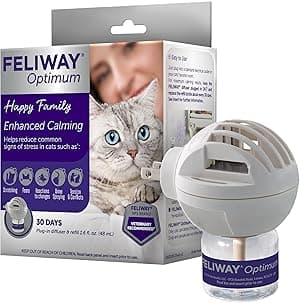 Feliway Optimum (New Model)Pheromone diffuser for reducing cat anxietyAmazonで価格をチェック
- Feliway Optimum (New Model)Pheromone diffuser for cat stress reliefAmazonで価格をチェック
- Feliway Optimum (New Model)Pheromone diffuser for reducing cat anxietyAmazonで価格をチェック
- Feliway Optimum (New Model)Pheromone diffuser for reducing cat anxietyAmazonで価格をチェック
When to See the Vet
| Sign | Urgency |
|---|---|
| No eating or drinking for 24+ hours | ⚠️ See vet promptly |
| Blood in urine or straining to urinate | 🚨 Same-day emergency |
| Lethargy, not moving | 🚨 Same-day emergency |
| Vomiting or diarrhea 3+ times in a day | ⚠️ See vet promptly |
| Raw skin from over-grooming | ⚠️ Within a few days |
| Night yowling persisting 1+ week (senior cats) | ⚠️ Within a few days |
Stress in cats is not just a behavioral issue — it is a medical one. Feline idiopathic cystitis (FIC), one of the most common urinary conditions in cats, is directly triggered by stress in the majority of cases.
3 Actions You Can Take Today
- Run through the stress checklist above — if 3 or more signs apply, call your vet today to schedule a check-up
- Start a 5-minute wand toy play session tonight — observe how your cat responds over 3 consecutive days
- Check your litter box count and cleanliness — confirm you have enough boxes and scoop them today
Track Your Cat's Health with PETTAS
When something seems "off," being able to tell your vet exactly when it started and how it has changed makes a huge difference in getting an accurate diagnosis. PETTAS's Health Record Timeline lets you log appetite, elimination, and behavior changes by date — so you walk into your vet appointment prepared.
Using Feliway or hairball supplements? Set them up in PETTAS's Medication Reminder feature so you never lose track of when you started or when to reorder.
For spring weight fluctuations, the Weight Tracking Graph makes it easy to spot gradual changes that might otherwise go unnoticed. And if you share cat care responsibilities with a partner or family member, the Family Sharing feature keeps everyone on the same page.
Small observations, recorded consistently, can catch big problems early — and that's the best kind of cat care there is.
Recommended products1 picks
#ad Contains Amazon affiliate links
Pet diary
Track the small changes in your cat's routine
Daily one-tap logs of appetite, weight, and bathroom habits. Spot stress signs earlier and explain them clearly to your vet.
All features free for 14 days — no card required
Get the latest articles by email
Weekly updates on pet health, medications, and insurance — straight to your inbox.
Share this article
Related Articles

Indoor Cat? 5 Best Cat Foods by Age & Condition (2026)
2026-05-18

Best 5 Cool Mats & Heat Relief Products for Cats in 2026 | Summer Comfort Guide
2026-05-04

Best 5 Cat Grooming Brushes for Shedding Season 2026: Find the Right One for Your Cat
2026-04-26
5 Vet-Approved Tips When Your Cat Refuses Medication
2026-04-06