

5 Best Grooming Tools for Cat Shedding Season (2026)

PETTAS Editorial Team
Up-to-date pet health guidance
Cat leaving fur everywhere? Rainy-season humidity makes shedding worse. Compare top 5 grooming tools, hairball supplements, and odor sprays. Quick-pick chart inside.
Contents(8)
Last updated: 2026-06-03
Shedding season and rainy-season humidity hitting at once? That combination is tough for indoor cat owners. Clumps of fur on the sofa, more frequent hairball vomiting, and a persistent pet odor that seems worse than usual — these are classic signs that your grooming routine needs a boost.
This guide compares 5 types of grooming tools and care products that tackle shedding, hairballs, and humidity-related odor at the same time.
Quick Pick: Best 4 by Use Case
| Use Case | Product Type | Why It Works |
|---|---|---|
| Best Overall | Undercoat removal brush (deshedding type) | Removes 60-90% more undercoat per session vs. regular brushes |
| Best for Hairball Relief | Hairball-care supplement (omega-3 + probiotics) | Supports digestion and gut motility to pass ingested fur |
| Best for Odor Control | Enzyme-based pet deodorizer spray | Breaks down odor molecules rather than masking them |
| Best Budget | Rubber grooming glove/brush | Under $10, massage-like feel most cats tolerate well |
How to Choose the Right Grooming Tool
1. Does it reach the undercoat?
Most shedding comes from the dense undercoat, not the top coat. Brushes that only smooth the surface won't solve the root problem. Look for stainless-steel deshedding tools or fine-toothed undercoat rakes.
2. Inside + outside approach for hairballs
No matter how well you brush, cats still groom themselves and swallow some fur. Pairing external brushing with a hairball-support supplement or specialized diet addresses the issue from both directions.
3. Humidity-proof your home
In humid conditions, pet odors intensify and skin bacteria multiply faster. An enzyme-based spray that you can use on fabric surfaces (beds, carpets, sofas) is a practical add-on during the rainy season.
4. Make the cat comfortable
A brush that causes discomfort will make your cat avoid grooming sessions entirely. Softer rubber options or shorter sessions with high-value treats go a long way toward building a positive association.
Top 5 Cat Shedding-Season Care Products
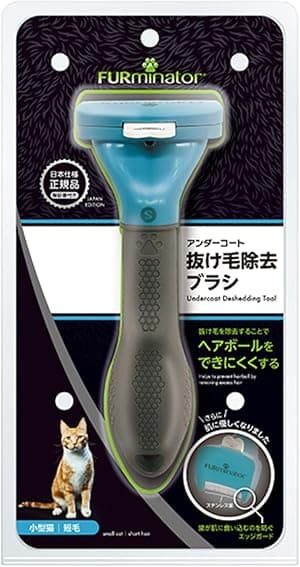
1. Undercoat Deshedding Brush (FURminator-style)
Price range: $25-45
This is the single most effective tool for reducing loose fur. The stainless-steel edge reaches through the top coat to remove dead undercoat without cutting guard hairs. Many owners report a noticeable drop in floor fur after just a few sessions. Use 2-3 times per week during peak shedding, and limit sessions to 5-10 minutes to avoid over-brushing.
Best for: Cats with dense undercoats; owners who want measurable results fast.
2. Hairball-Care Supplement (Omega-3 + Probiotic)
Price range: $15-30 for 30-60 doses
Swallowed fur is unavoidable for self-grooming cats. Supplements containing omega-3 fatty acids improve coat quality (less shedding overall) while probiotic components support gut motility to help ingested fur pass more easily. If vomiting frequency is more than twice a week or involves anything beyond fur, consult a vet before relying on supplements alone.
Best for: Cats that vomit hairballs frequently; owners who prefer a food-based approach.
3. Rubber Grooming Glove or Brush
Price range: $5-15
If your cat runs from the sight of a regular brush, a rubber grooming glove is worth trying first. The soft nubs mimic the feel of petting, so cats that resist traditional tools often accept these with little fuss. Deshedding performance is lower than a dedicated tool, but it's a great stepping stone for building grooming habits.
Best for: Brush-averse cats; first-time cat owners.
4. Enzyme-Based Pet Deodorizer Spray
Price range: $8-15 per 250-300ml
Humid weather makes cat odors noticeably worse. Unlike fragrance sprays that mask smells, enzyme-based formulas break down the organic compounds (urine proteins, skin secretions) at the source. Choose one labeled safe for cats and fabric surfaces. Always ventilate after use — cats are more sensitive to chemical exposure than dogs, so avoid formulas with phenol, high-concentration ethanol, or certain essential oils (tea tree, eucalyptus).
Best for: Living spaces where odor becomes obvious in humid weather.
5. Indoor-Cat Hairball-Control Dry Food
Price range: $20-40 for 2kg
If you prefer to keep things simple, switching to a hairball-control formula designed for indoor cats is the lowest-effort long-term solution. These foods adjust dietary fiber levels to aid the natural passage of ingested fur. High-quality protein also contributes to a healthier coat that sheds less. The rainy season is a natural moment to review whether your cat's current food is still a good fit.
Best for: Owners who want a hassle-free, supplement-free approach.
Comparison Table
| Type | Price Range | Main Benefit | Approach |
|---|---|---|---|
| Deshedding brush | $25-45 | Dramatically reduces loose fur | External |
| Hairball supplement | $15-30 | Supports fur passage through gut | Internal |
| Rubber grooming glove | $5-15 | Cat-friendly, low-stress option | External |
| Enzyme deodorizer spray | $8-15 | Eliminates humidity odors | Environmental |
| Hairball-control food | $20-40 | Daily care through diet | Internal |
Recommendation: Where to Start
If you can only pick one thing, start with a quality undercoat deshedding brush. The visible difference in fur removal is immediate and satisfying. Pair it with a hairball-control food or supplement if vomiting is a concern. Rubber gloves are the go-to for cats that resist brushing. And this time of year, keeping an enzyme spray on hand for humid-weather odor management is a smart move.
Track Changes with PETTAS
Buying the right tool is step one. Knowing whether it's actually working is step two. With PETTAS, you can log hairball frequency, coat observations, and appetite changes over time — making it easy to spot real improvement or catch early warning signs before your next vet visit. That kind of record also gives your vet useful context when you bring it up during checkups.
FAQ
Q1. How often should I brush my cat during shedding season?
A. For most cats, 2-3 times per week is sufficient with a deshedding brush. Longer-coated cats may benefit from daily light brushing. Keep sessions short (5-10 min) and positive, and stop immediately if your cat shows stress signals.
Q2. When does hairball vomiting require a vet visit?
A. Once or twice a month is generally considered normal. If vomiting occurs more than twice a week, involves anything other than fur (food, bile, blood), or is accompanied by lethargy or appetite loss, a vet visit is warranted. A sudden increase during shedding season is worth monitoring closely.
Q3. Are deodorizer sprays safe to use around cats?
A. Cats are significantly more sensitive to chemical compounds than dogs. Choose sprays specifically labeled as cat-safe, preferably enzyme or bio-based formulas. Avoid products containing phenols, high-concentration ethanol, or essential oils known to be toxic to cats (tea tree, eucalyptus, clove). Always ventilate the area after use.
Q4. Can indoor cats shed as much as outdoor cats?
A. Yes — often more so. Indoor cats are exposed to artificial lighting year-round, which disrupts the seasonal cues that regulate shedding cycles. This can result in more consistent, year-round shedding rather than two distinct peaks in spring and fall.
Q5. Supplement vs. hairball-control food: which is better?
A. Food changes are simpler to maintain long-term since you're already feeding daily. Supplements offer flexibility if you're satisfied with your cat's current food. For cats with frequent hairball vomiting, a short supplement trial often gives faster results; food can maintain the benefit afterward.
References
- Hairballs in Cats (Cornell Feline Health Center) — Veterinary overview of hairball formation, prevention, and when to seek care
- Grooming Your Cat (American Association of Feline Practitioners) — AAFP recommendations on grooming frequency, technique, and skin health
- Omega-3 Fatty Acids (Merck Veterinary Manual) — Evidence base for omega-3 use in skin and coat health for companion animals
- Toxic Plants and Substances for Cats (ASPCA Animal Poison Control) — Reference for identifying cat-unsafe chemicals including those found in household sprays
- Cat Nutrition and Life Stage Feeding (AAHA) — AAHA guidelines on dietary fiber and nutritional management for indoor cats
Recommended products1 picks
#ad Contains Amazon affiliate links
Pet diary
Track the small changes in your cat's routine
Daily one-tap logs of appetite, weight, and bathroom habits. Spot stress signs earlier and explain them clearly to your vet.
All features free for 14 days — no card required
Get the latest articles by email
Weekly updates on pet health, medications, and insurance — straight to your inbox.
Share this article
Related Articles
Best 5 Cat Grooming Brushes for Shedding Season 2026: Find the Right One for Your Cat
2026-04-26

5 Ways to Cool Indoor Cats and Prevent Heatstroke (2026)
2026-05-31

5 Vet-Approved Ways to Prevent Cat Urinary Stones (2026)
2026-05-30

7 Cat Stress Signs Owners Miss: Vet-Approved Fixes (2026)
2026-05-29

7 Early Signs of Cat Kidney Disease: Home Checklist (2026)
2026-05-28