

3 Must-Know Pet Supplements for Rainy Season (2026)

PETTAS Editorial Team
Up-to-date pet health guidance
Skin, gut, and joint issues spike in humid weather. Learn which supplements actually work, dosing basics, and 3 vet-backed tips to start today. Quick-pick chart inside.
Contents(10)
Last updated: 2026-06-21
Is your dog scratching more than usual? Has your cat's digestion been off this month? You are not imagining it.
During the rainy season, sustained humidity of 70-90% disrupts the skin microbiome, upsets gut flora, and can worsen joint discomfort in older pets. A growing number of pet owners turn to supplements at this time of year -- and for good reason. But choosing the wrong product, or adding too many at once, can waste money and occasionally cause harm.
This guide covers the three supplement categories most relevant during humid weather, how to evaluate products, and the mistakes owners commonly make.
Do Pets Actually Need Supplements?
If your pet eats a complete and balanced diet -- one that meets AAFCO or equivalent nutritional standards -- a healthy adult dog or cat in normal condition generally does not require additional supplements.
That said, the rainy season creates specific stressors that may tip the balance:
- Persistent humidity encourages overgrowth of skin bacteria and yeast, increasing itching, dandruff, and odor
- Barometric pressure swings can aggravate chronic joint pain, especially in senior pets
- Heat and humidity accelerate food spoilage, alter feeding routines, and stress gut flora
- Reduced outdoor exercise from rain days slows digestion and can contribute to constipation or loose stools
Think of supplements not as medicine, but as targeted support during a high-stress season.
The 3 Supplement Categories to Consider This Season
1. Skin and Coat -- Omega-3 Fatty Acids
Key ingredients: EPA, DHA (from fish oil), biotin, zinc
Multiple peer-reviewed studies support omega-3 fatty acids for reducing skin inflammation, improving coat quality, and decreasing the severity of atopic dermatitis in dogs. For cats, EPA and DHA supplementation has shown similar benefits for coat condition.
Practical tips:
- Allow 4-8 weeks of consistent use before judging effectiveness
- Check the label for actual EPA + DHA mg per dose, not just "fish oil content"
- Too much omega-3 can cause loose stools -- start at the lower end of the recommended dose range
- Recommended starting range: approximately 20-50 mg EPA+DHA per kg (2.2 lbs) of body weight per day, but confirm with your vet
2. Gut Health -- Probiotics and Prebiotics
Key ingredients: Lactobacillus, Bifidobacterium, fructooligosaccharides (FOS)
The rainy season elevates food poisoning risk, and even small changes in food freshness can trigger loose stools in sensitive pets. Probiotic supplements support a balanced gut microbiome and may also reinforce immune function.
Practical tips:
- Expect 2-4 weeks before noticing consistent improvement in stool quality
- Do not substitute with yogurt -- many dogs and most cats are lactose intolerant
- If diarrhea lasts more than 3 days, visit a vet rather than increasing supplement doses
3. Joint Support -- Glucosamine and Chondroitin
Key ingredients: Glucosamine HCl, chondroitin sulfate, MSM
Barometric changes during rainy weather can noticeably affect pets with arthritis. Owners often notice their dog is reluctant to climb stairs or their senior cat moves more stiffly on gray days.
Practical tips:
- Full effects typically require 8-12 weeks of consistent use
- Recommended for dogs aged 7+ years (large breeds from 5+), or any pet showing mobility changes
- Always check with your vet before starting if your pet has kidney disease -- some formulations may not be appropriate
Recommended Products for Rainy Season
Here are three well-formulated options covering each category above. Always verify dosing with your vet before starting.
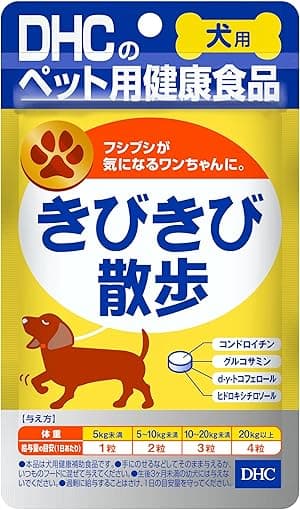 DHC Dog Supplement Kibi-Kibi Walk 60 tablets- Glucosamine and chondroitin blend for joint comfort; useful for senior dogs whose mobility dips on low-pressure daysAmazonで価格をチェック
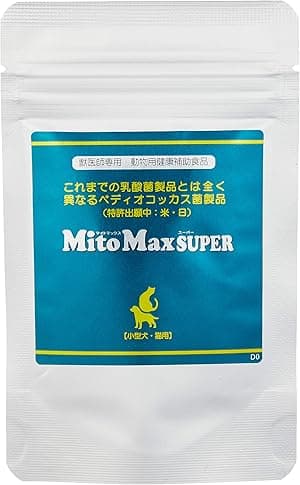 Mytomax Super Small Dog & Cat 60 capsules- Probiotic formula to support gut flora; good starting point when soft stools coincide with humid weatherAmazonで価格をチェック
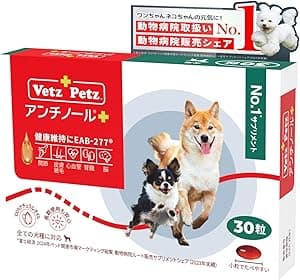 Antinol Plus Dog Supplement 30 capsules- High-concentration omega-3 (PCSO-524 complex) for skin inflammation and coat condition; backed by clinical studies in dogsAmazonで価格をチェック
Common Mistakes Pet Owners Make with Supplements
- Giving human supplements to pets (xylitol, excess vitamin D, and other ingredients in human products can be toxic to dogs and cats)
- Stacking multiple supplements simultaneously (makes it impossible to identify what is helping or causing side effects)
- Stopping after 1-2 weeks because "it is not working" (most categories require 4-12 weeks minimum)
- Ignoring body weight for dosing (a 3 kg (6.6 lbs) cat needs a very different amount than a 30 kg (66 lbs) dog)
- Giving dog-formulated products to cats (some dog supplements contain allium derivatives or excessive vitamin D that can seriously harm cats)
- Skipping the vet conversation when a pet is already on medication (drug-supplement interactions are real)
A Special Note for Cat Owners
Cats are metabolically distinct from dogs in ways that matter for supplementation:
- Cats cannot synthesize taurine and arginine on their own -- supplementing these incorrectly can actually mask deficiencies caused by an imbalanced diet
- Vitamin D toxicity occurs at lower thresholds in cats than in dogs
- Aloe vera, often found in "natural" skin products, is toxic to cats
For cats, always start at 25-50% of the recommended dose and observe for 7 days before increasing.
When to See a Vet Instead of Reaching for a Supplement
Supplements support health -- they do not treat disease. Please book a vet appointment if you notice:
- Skin itching or redness lasting more than 2 weeks without improvement
- Loose stools or diarrhea persisting beyond 3 days
- Visible limping, stair avoidance, or reluctance to jump
- Unexplained weight loss or gain of 5%+ within one month
- Existing medications in use (always flag supplements to your vet)
3 Steps You Can Take Today
- Check your pet's current food label -- confirm it says "complete and balanced" per AAFCO standards. If it does, the nutritional baseline is covered; supplements should address a specific concern, not fill a gap that does not exist.
- Log symptoms for 7 days -- note itching, stool quality, and mobility on a simple daily scale (1-5). This makes it far easier to evaluate whether a supplement is working after 4-8 weeks.
- Choose one supplement category -- skin, gut, or joint. Start with the issue that concerns you most, at the recommended dose, for a full 4-week trial before adding anything else.
FAQ
Q1. When should I start joint supplements for my dog?
A. Most veterinarians suggest proactively starting around age 7 for medium and small breeds, and age 5 for large breeds. If mobility changes appear earlier, start sooner. Allow 8-12 weeks to evaluate results.
Q2. Can I give my cat the same probiotic as my dog?
A. Not necessarily. Always choose species-specific products. Some strains safe for dogs can cause GI upset in cats, and dosing differs significantly by body weight and species.
Q3. How much do pet supplements cost per month?
A. Expect to spend roughly $10-40 USD per month depending on the type and brand. Higher price does not always mean higher quality -- compare the actual mg of active ingredients per dose relative to body weight.
Q4. Are there any supplements to avoid completely for cats?
A. Yes. Avoid products containing allium extracts (garlic, onion), high-dose vitamin D, aloe vera, and any supplement designed exclusively for dogs. When in doubt, ask your vet before purchasing.
Q5. How do I know if a supplement is working?
A. Track the specific symptom you started supplementing for -- itching frequency, stool firmness, or mobility score -- and compare at 4-week intervals. A supplement that shows no measurable change after 8-12 weeks is unlikely to be the right fit for that pet.
Track Supplement Progress with PETTAS
Starting a supplement is only half the equation -- the other half is actually remembering to give it daily and checking whether it is making a difference weeks later. That was one of the core reasons I built PETTAS.
With the health timeline and medication reminder features, you can log the start date, dose, and daily observations in seconds. When it comes time to evaluate results at week 4 or week 8, the data is right there. You can also share the records with your vet or family members caring for the same pet.
Start tracking today: PETTAS official site
References
- Merck Veterinary Manual -- Nutritional Requirements of Dogs and Cats -- Evidence-based overview of canine and feline macronutrient and micronutrient requirements
- AAHA Nutrition and Weight Management Guidelines -- Clinical guidelines for pet nutrition assessment and supplementation decision-making
- FDA Center for Veterinary Medicine -- Animal Food Safety -- Regulatory framework for pet supplements and safety reporting
- NIH PubMed: Omega-3 fatty acids in canine atopic dermatitis (multiple authors) -- Peer-reviewed literature supporting EPA/DHA for skin inflammation in dogs
- Cornell University College of Veterinary Medicine -- Feline Health Topics -- Species-specific guidance on cat nutrition and supplement cautions
Recommended products5 picks
#ad Contains Amazon affiliate links

Ready to start managing your pet's health with PETTAS?
Medication tracking, health logs, and family sharing in one app. 14-day free trial — all features included.
All features free for 14 days — no card required
Get the latest articles by email
Weekly updates on pet health, medications, and insurance — straight to your inbox.
Share this article
Related Articles

Top 5 Pet Cameras & Auto Feeders for Rainy Season (2026)
2026-06-20

5-Step Home Grooming Guide for Dogs & Cats (2026)
2026-06-19

Fleas in 2-3 Weeks: 5 Rainy Season Pet Pest Tips (2026)
2026-06-17

5 Steps to Fix Pet Bad Breath & Tartar in Rainy Season (2026)
2026-06-16

5 Rainy-Season Food Poisoning Risks for Pets (2026)
2026-06-15