

3x More Ear Infections in Rainy Season: Vet Guide (2026)

PETTAS Editorial Team
Up-to-date pet health guidance
Humidity spikes ear infections in dogs and cats. Learn the right cleaning frequency, step-by-step technique, and 5 mistakes to avoid. Vet-backed guide inside.
Contents(10)
Last updated: 2026-06-29
Is your dog shaking their head more than usual this month? During Japan's rainy season, ear infections in dogs and cats spike dramatically — and humidity is the main culprit. Studies show that otitis externa (outer ear infection) is one of the top reasons for vet visits in summer, largely because warm, moist environments allow bacteria and yeast (especially Malassezia) to thrive inside the ear canal. This guide explains the correct ear-cleaning technique, how often to clean, and the most common mistakes owners make.
Why Rainy Season Means More Ear Infections
A dog's ear canal is L-shaped, which means air circulation is naturally poor. Add high humidity, wet fur after rain walks, or residual water from bathing, and you've created the perfect breeding ground for infection.
Cats are better at self-grooming, but floppy-eared breeds or cats with dense ear hair are still vulnerable. Pets with allergies or a history of ear problems face an even higher risk during this season.
High-risk situations to watch for:
- Floppy-eared dogs (ear flap traps moisture)
- Dogs with dense hair inside the ear canal
- Pets with skin allergies or compromised skin barriers
- Any pet that got wet in the rain and was not properly dried
How Often Should You Clean Your Pet's Ears?
More is not better. Overcleaning damages the delicate ear canal lining, which can actually increase the risk of infection. Healthy ears have a natural self-cleaning mechanism — you only need to support it, not replace it.
| Pet Type | Recommended Frequency |
|---|---|
| Healthy dog/cat (upright ears) | Once or twice a month |
| Floppy-eared dog or dense ear hair | Once a week |
| History of recurring ear infections | Follow vet instructions |
| Rainy season / after wet walks | Inspect after each rain exposure |
For cats without symptoms, a monthly visual check is usually sufficient. Don't skip it entirely just because cats seem fine — early signs are easy to miss.
Step-by-Step: How to Clean Your Pet's Ears Correctly
What you need: Pet-specific ear cleaning solution, cotton pads or gauze (no cotton swabs inside the canal)
Step 1 — Inspect first. Look at the inner side of the ear flap. Check for redness, unusual odor, dark or discolored discharge. If you see any of these, skip cleaning and see a vet.
Step 2 — Apply ear cleaner. Gently insert the nozzle at the entrance of the ear canal. Use about 1-2 ml for dogs, 0.5-1 ml for cats. Do not push the nozzle deep inside.
Step 3 — Massage the ear base for 10-15 seconds. You should hear a soft squishing sound — that means the solution is loosening debris inside.
Step 4 — Let your pet shake their head. This brings dissolved wax and debris outward naturally.
Step 5 — Wipe the outer canal only. Use a cotton pad to gently remove what has come out. Never push anything back inside.
Never use cotton swabs deep in the ear canal. The L-shaped canal means swabs push debris further in and risk damaging the eardrum.
Recommended Ear Care Products
Having a reliable ear cleaner at home makes it easy to stay consistent with your routine, especially during the rainy season.
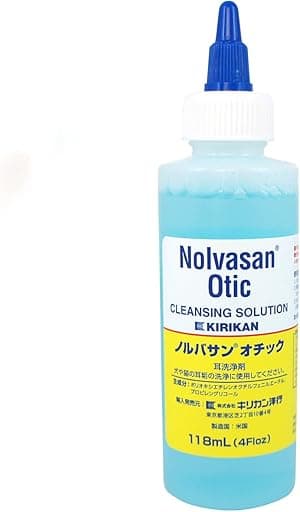 Nolvasan Otic Ear Cleaner 118mlantibacterial and antifungal formula widely used in veterinary clinics for routine ear maintenanceAmazonで価格をチェック
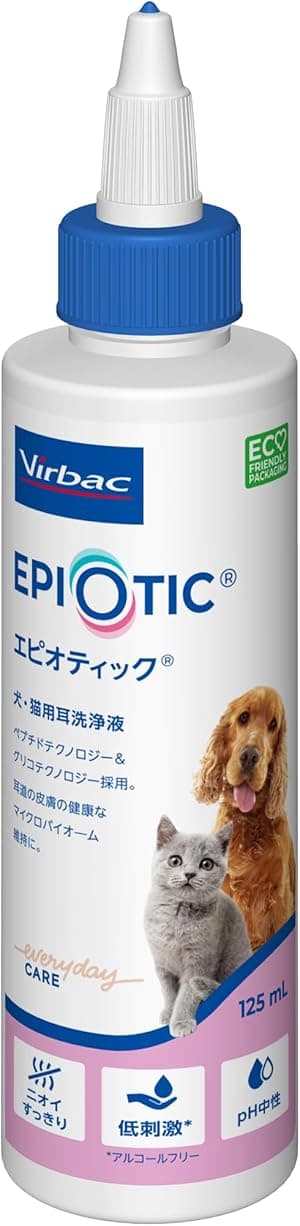 Virbac Epi-Otic Peptide Ear Cleaner 125mlgentle, low-irritation formula that helps control Malassezia and bacteria buildupAmazonで価格をチェック
5 Mistakes Owners Commonly Make
- Using cotton swabs inside the ear canal
- Using water or human ear drops (wrong pH and ingredients for pets)
- Skipping drying after baths or rain walks
- Wiping until the ear looks completely clean (removing natural protective wax)
- Assuming mild redness is "normal" and not worth checking
The cotton swab issue is the most common — and the most damaging. Because the canal curves, the swab cannot actually reach the debris, but it can push it deeper or injure the eardrum.
Warning Signs: When to See a Vet
If any of the following appear, book a vet visit promptly. Untreated otitis externa can progress to middle ear infections (otitis media), which are significantly harder and more expensive to treat.
- Frequent head shaking (multiple times per day)
- Scratching at the ear or rubbing it against furniture or the floor
- Sweet-sour or foul odor from the ear
- Black, dark brown, or yellow discharge
- Visible redness or swelling around the ear opening
- Pain response when the ear is touched
- Head tilt that doesn't go away
If you notice any of these during the rainy season, don't wait. A mild infection caught early typically resolves with a short course of ear drops and costs significantly less than treating a chronic case.
3 Actions You Can Take Starting Today
- Do a visual ear check tonight — smell and look at the inner flap. Foul odor or dark debris means a vet visit this week.
- Add ear drying to your post-rain routine — after every wet walk, gently wipe the inner ear flap with a dry cotton pad. This single habit prevents a lot of infections.
- Stock a pet-safe ear cleaner at home — use it once a week for floppy-eared dogs and once or twice a month for other pets throughout the rainy season.
FAQ
Q1. How often should I clean my dog's ears?
A. For most dogs with healthy upright ears, once or twice a month is sufficient. Floppy-eared breeds or dogs prone to infections should be cleaned weekly, especially during humid months. Overcleaning can cause irritation, so avoid cleaning more than needed.
Q2. Do cats need ear cleaning?
A. Cats are generally good at self-cleaning and usually only need a monthly visual check. However, if you notice black debris, persistent scratching, or odor, see a vet — these can indicate ear mites or yeast infection.
Q3. What does a healthy ear look like vs. an infected one?
A. A healthy ear is light pink inside with minimal odor and small amounts of pale or light brown wax. An infected ear may show redness, swelling, dark or excessive discharge, and a noticeable sour or musty odor.
Q4. How much does ear infection treatment cost?
A. A mild case treated early typically costs $30-80 USD for the vet visit plus ear medication. Chronic or severe infections requiring culture tests or surgery can exceed $300-500. Prevention through regular maintenance is far more cost-effective.
Q5. Can I use human ear drops on my pet?
A. No. Human ear drops have different pH levels and active ingredients that can irritate or damage your pet's ear canal. Always use products specifically formulated for dogs or cats, ideally recommended by your vet.
Track Ear Care With PETTAS
One of the biggest reasons ear infections get missed is simple: owners can't remember when they last cleaned their pet's ears or what the vet said at the last visit. "Was it two weeks ago or a month ago?" — that uncertainty leads to either overcleaning or skipping care entirely.
That's one of the core problems I built PETTAS to solve. You can log each ear cleaning session, note any symptoms you observed, and set reminders so the next session doesn't slip through the cracks. If multiple family members share pet care duties, the shared log makes sure everyone stays on the same page.
During rainy season especially, having a simple record system makes the difference between catching a problem early and dealing with a chronic infection.
-> Start tracking your pet's ear health: PETTAS
References
- Merck Veterinary Manual: Otitis Externa — comprehensive clinical reference on causes, diagnosis, and treatment of ear infections in dogs and cats
- AAHA Dermatology Guidelines for Dogs and Cats — evidence-based guidelines covering ear and skin disease prevention and management
- Cornell University College of Veterinary Medicine: Ear Infections — owner-facing educational resource on identifying and managing ear infections
- AVMA: Caring for Your Pet's Ears — general guidance from the American Veterinary Medical Association on routine ear care
- Japan Veterinary Medical Association (JVMA) — Japanese veterinary standards for skin and ear disease management in companion animals
Recommended products2 picks
#ad Contains Amazon affiliate links
Ready to start managing your pet's health with PETTAS?
Medication tracking, health logs, and family sharing in one app. 14-day free trial — all features included.
All features free for 14 days — no card required
Get the latest articles by email
Weekly updates on pet health, medications, and insurance — straight to your inbox.
Share this article
Related Articles

5 Warning Signs: Dog & Cat Ear Infections in Rainy Season (2026)
2026-06-04

5 Steps to Heal From Pet Loss (Rainy Season 2026)
2026-06-28

5 Vet-Approved Ways to Fight Pet Odor in Rainy Season (2026)
2026-06-27

5 Reasons Pet Eye Discharge Worsens in Humidity (2026)
2026-06-26

5 Science-Based Habits to Extend Your Pet's Healthy Life (2026)
2026-06-25