
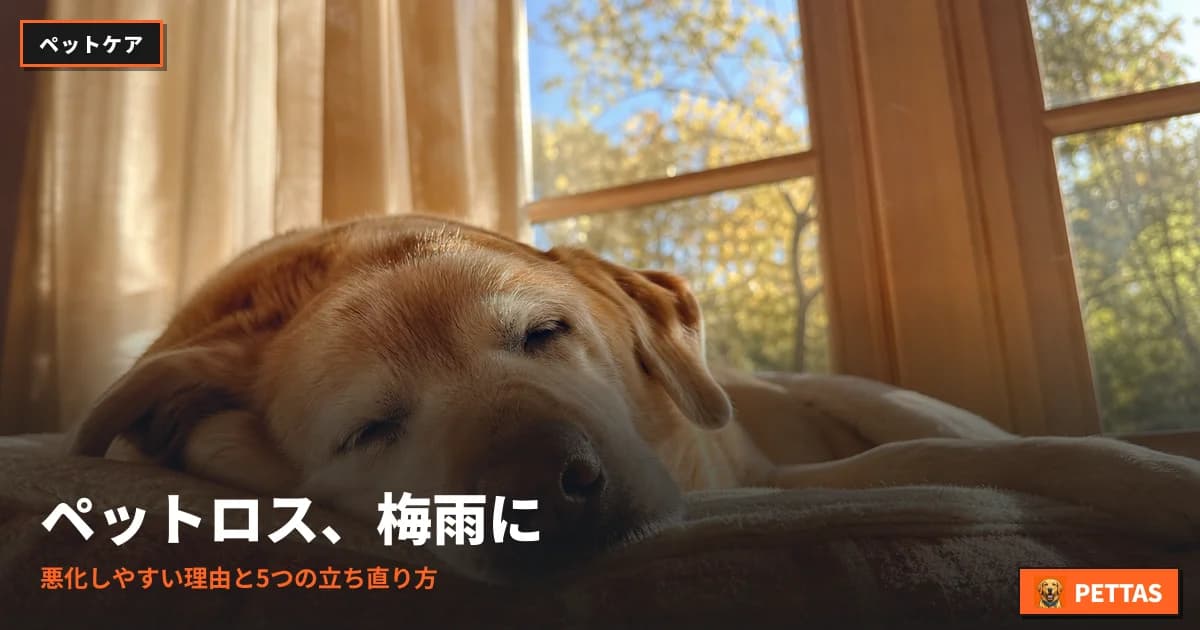
5 Steps to Heal From Pet Loss (Rainy Season 2026)

PETTAS Editorial Team
Up-to-date pet health guidance
Over 60% of pet owners feel grief that disrupts daily life. Rainy weather makes it worse. Science-backed recovery steps inside - read the full guide.
Contents(10)
Last updated: 2026-06-28
Has your grief over losing a pet felt heavier since the rainy season began? You are not imagining it.
Over 60% of pet owners report grief severe enough to disrupt daily life after losing a companion animal, according to surveys by the Japan Veterinary Medical Association. And the physical and psychological effects of prolonged rain - low air pressure, limited sunlight, and forced time indoors - can amplify that grief significantly.
In this article, we break down why rainy seasons make pet loss harder, what signs to watch for, and five concrete steps you can take today to begin healing.
Why Rainy Weather Makes Pet Loss Grief Worse
Grief does not exist in a vacuum. Environmental factors shape how intensely we feel loss, and rainy seasons hit on multiple fronts at once.
Low air pressure disrupts the autonomic nervous system. When barometric pressure drops, the balance between the sympathetic and parasympathetic nervous systems shifts. This reduces serotonin production - the neurotransmitter responsible for emotional stability and well-being. Less serotonin means sadness feels heavier and motivation drops.
Staying indoors removes your usual coping routines. Many pet owners relied on daily walks as both exercise and stress relief. Rainy weather breaks that routine, and when the routine is gone, the absence of your pet becomes more apparent.
Sensory memories ambush you at home. The sound of rain, the smell of your pet's favorite blanket, the corner of the room they always settled into - sensory memories are tightly linked to emotional memory. Rain-soaked days spent indoors make those triggers unavoidable.
Pet Loss Syndrome: Signs You Should Not Ignore
Grief after losing a pet is normal. But when symptoms persist for two or more weeks and interfere with daily function, it may be what clinicians call complicated grief or pet loss syndrome.
Common mistake: telling yourself "I should be over this by now"
Suppressing grief does not speed up recovery - it delays it. Unexpressed grief can resurface months or even years later as delayed bereavement, often triggered by a new loss or life change.
Pet loss grief checklist
- Persistent sadness or emptiness lasting more than two weeks
- Loss of appetite or overeating
- Sleep disturbances (insomnia or sleeping too much)
- Difficulty concentrating at work or school
- Unable to remove or reorganize your pet's belongings
- Strong feelings of guilt ("I should have done more")
- Withdrawing from friends and family
- Intense guilt about the idea of getting a new pet
If you checked three or more, consider reaching out to a grief counselor, your regular veterinarian, or a mental health professional.
5 Science-Backed Steps to Recover From Pet Loss
Step 1: Write a 5-minute grief journal each day
Expressive writing - putting emotions into words - has been shown to accelerate grief processing (Pennebaker & Beall, 1986). You do not need to post it online. A simple notebook works. Write what you miss, what you are grateful for, or just say "I miss you." Five minutes a day is enough to start.
Step 2: Preserve memories, do not rush to erase them
There is no deadline to pack away your pet's belongings. Instead of "clearing out," consider creating a memory archive - a photo album, a health diary, a scrapbook. Organizing records of your pet's life (vet visits, weight history, vaccination dates) transforms raw grief into a tribute.
For those who want to preserve those records beautifully:
Step 3: Keep one routine you shared with your pet
Routines are anchors. If you walked every morning at 7 AM, keep walking at 7 AM - even without your pet. If you always gave a supplement at breakfast, use that moment intentionally. Maintaining the rhythm of care helps your nervous system transition rather than crash.
Step 4: Connect with others who understand
Pet loss is often called "disenfranchised grief" - a loss that society sometimes minimizes. Finding a community of people who have gone through the same experience (online forums, support groups, or even social media communities) provides the specific validation that friends and family may not always offer.
Step 5: Understand that recovery has no deadline
Kubler-Ross's grief model describes five stages - denial, anger, bargaining, depression, acceptance - but these are not linear. Most people cycle through them repeatedly. On average, grief from pet loss softens significantly within 3 to 12 months, but it is entirely normal for it to take longer. Comparing your timeline to others is not helpful.
Should You Get a New Pet? Navigating the Guilt
One of the most common questions after pet loss is: "Would getting a new pet be a betrayal?"
From a grief counseling perspective, love is not a finite resource. Welcoming a new animal companion does not erase or dishonor the one you lost. However, adopting impulsively - purely to fill the emptiness - can place unfair expectations on a new pet and may delay processing the original grief.
A healthier signal: you feel emotionally ready to invest in a new relationship on its own terms, not as a replacement.
Supplements to Support Your Own Well-being During Grief
Grief is physically taxing. It disrupts sleep, digestion, and immune function. If you are also caring for a senior pet and navigating anticipatory grief, the following can help support their comfort while you focus on your own recovery:
 Maxi/Guard Oral Cleansing Gel equivalent - MytoMax Super Probiotic (60 capsules)Gut health support for small dogs and cats; grief-related stress can affect digestive health in pets tooAmazonで価格をチェック
 Antinol Plus Supplement for Dogs (30 softgels)Supports joint, skin, and cardiovascular health in senior dogsAmazonで価格をチェック
When to See a Professional
Pet loss grief can cross into clinical depression or complicated grief. Consult a doctor, therapist, or mental health professional if:
- You have not been able to eat a full meal for more than one week
- You are having thoughts of self-harm
- Daily functioning (work, childcare, basic self-care) has been impaired for more than one month
- Physical symptoms (headaches, digestive issues, frequent illness) persist without a medical cause
Your veterinarian is also a good first contact - many have experience supporting bereaved owners and can refer you to grief counseling resources.
3 Actions You Can Take Today
- Write a letter to your pet tonight (5 minutes) - No audience required. Expressing grief in words is one of the most effective tools for processing loss. Start with "Thank you for..."
- Walk the route you used to share - alone - Use a dry spell in the rain to revisit familiar paths. Over time, the emotional weight of that walk shifts from loss to remembrance.
- Organize one small memory - One photo, one vet record, one note. Start small. The act of preserving rather than discarding signals to your nervous system that this relationship still holds value.
Build the Habit of Recording With PETTAS
Many pet owners who have lost a companion tell me the same thing: "I wish I had kept better records." That's part of why I built PETTAS.
PETTAS lets you log health records on a timeline, track weight over time, manage vaccine schedules, and share everything with family members - so that nothing important slips through the cracks. Whether you are supporting a senior pet now or preparing for a new companion, PETTAS helps you build a care record you will be glad you kept.
Start recording today: PETTAS Official Site
FAQ
Q1. How long does pet loss grief typically last?
A. Individual timelines vary widely, but grief from pet loss often softens significantly within 3 to 12 months. If intense grief persists beyond one year and disrupts daily life, speaking with a grief counselor or therapist is recommended.
Q2. Is it normal to feel more devastated by a pet's death than a person's?
A. Yes, and it is more common than many people realize. Pets are constant daily companions, and their deaths often remove core routines and sources of unconditional comfort. The depth of grief is proportional to the depth of the bond, not the species.
Q3. How do I explain a pet's death to a young child?
A. Use clear, honest language appropriate to the child's age. Phrases like "went to sleep" or "went away" can cause confusion or anxiety. Acknowledge the child's sadness openly and allow them to participate in a small ritual, such as placing flowers or drawing a picture in memory of the pet.
Q4. When is it okay to get a new pet after pet loss?
A. There is no universal timeline. The key signal is readiness to invest in a new relationship on its own terms rather than as a direct replacement. Many grief counselors suggest waiting until the most acute phase of grief has passed - typically at least 3 months - before making that decision.
Q5. Can pet loss cause physical illness?
A. Yes. Grief activates the body's stress response system, which can suppress immune function, disrupt sleep and digestion, and trigger headaches or fatigue. These symptoms usually resolve as grief processes naturally, but persistent physical symptoms should be evaluated by a physician.
References
- Japan Veterinary Medical Association (JVMA) - Official veterinary guidance and pet loss support resources in Japan
- American Veterinary Medical Association (AVMA) - Pet Loss and Grief - Veterinary perspective on bereavement support for pet owners
- Pennebaker JW, Beall SK. "Confronting a traumatic event: toward an understanding of inhibition and disease." Journal of Abnormal Psychology, 1986 - via PubMed - Foundational research on expressive writing as a grief processing tool
- Kubler-Ross E. "On Death and Dying." Macmillan, 1969 - Original source for the five stages of grief model
- Cornell University College of Veterinary Medicine - Pet Loss Support Hotline - Peer support hotline for bereaved pet owners, staffed by veterinary students under professional supervision
Recommended products5 picks
#ad Contains Amazon affiliate links



Ready to start managing your pet's health with PETTAS?
Medication tracking, health logs, and family sharing in one app. 14-day free trial — all features included.
All features free for 14 days — no card required
Get the latest articles by email
Weekly updates on pet health, medications, and insurance — straight to your inbox.
Share this article
Related Articles

7 Early Signs of Heart Disease in Dogs & Cats (2026)
2026-06-22

3 Must-Know Pet Supplements for Rainy Season (2026)
2026-06-21

Dog & Cat Diarrhea: 5 Home Remedies + Vet Warning Signs
2026-05-15

5 Vet-Approved Ways to Fight Pet Odor in Rainy Season (2026)
2026-06-27

5 Reasons Pet Eye Discharge Worsens in Humidity (2026)
2026-06-26